What is your preferred working environment? An office or the outdoors? Are your most creative ideas sparked in the shower or while hiking? Throughout the day, how often do you move (or how often do you sit)? These are just a few examples of our simple environmental conditions that can affect performance and your ability to access the flow state.
It is no secret that our environment plays a significant role in our productivity. Sometimes, a slight shift in location or addition to your workspace is all it takes to perform at your best.
Flow can be engineered by designing your environment to “trigger” productivity. We can configure our space to make us more productive and to make it easier to find flow on a daily basis.
If you missed the introduction to the flow state and the internal conditions click here for the introduction to flow.
There are three external flow triggers that can propel us into the here and now and create an environment that eliminates distractions and allows intense focus on any task at hand.
These selected external triggers include risk taking, creating a rich environment, and cultivating a sense of deep embodiment in the work or activity at hand.
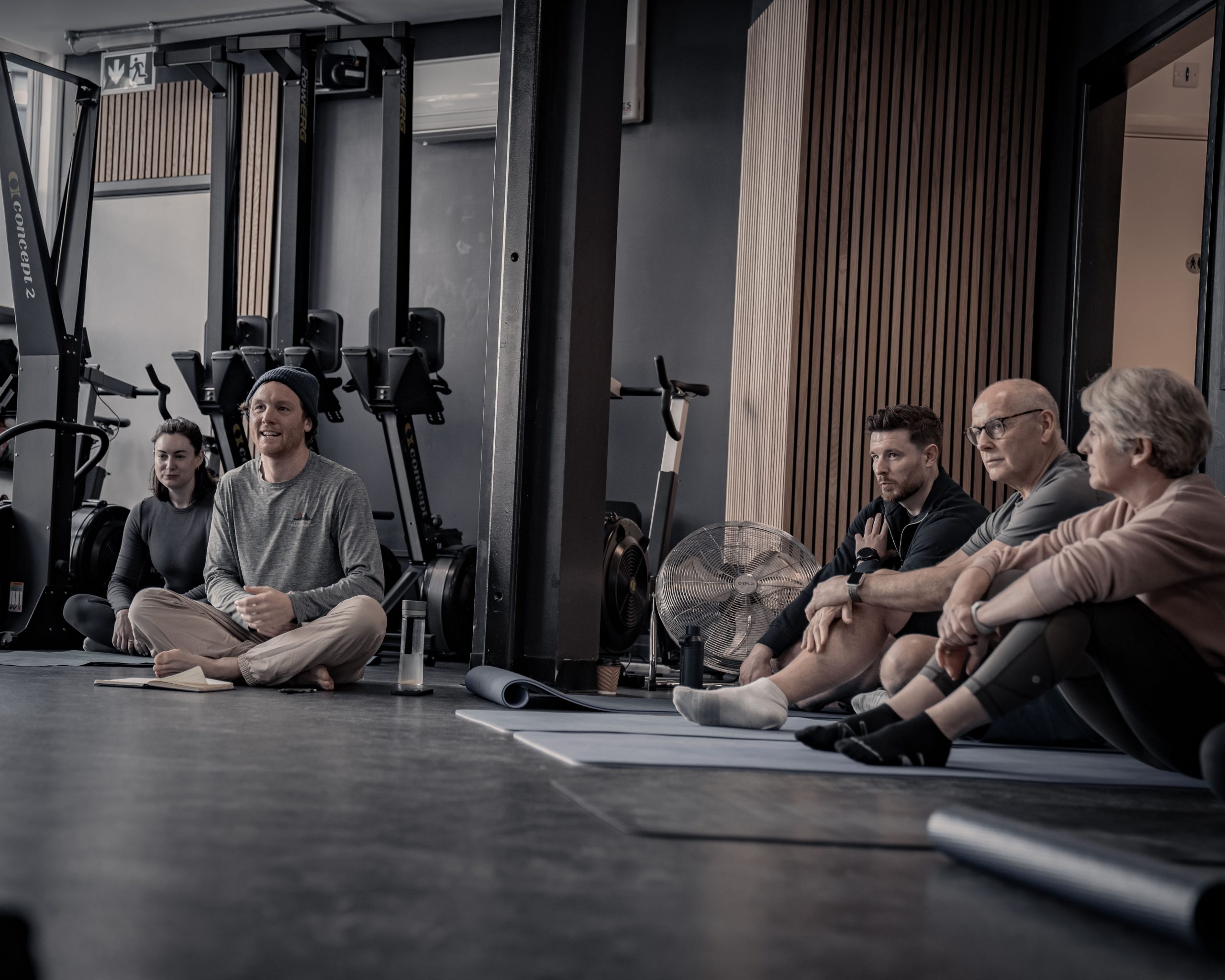
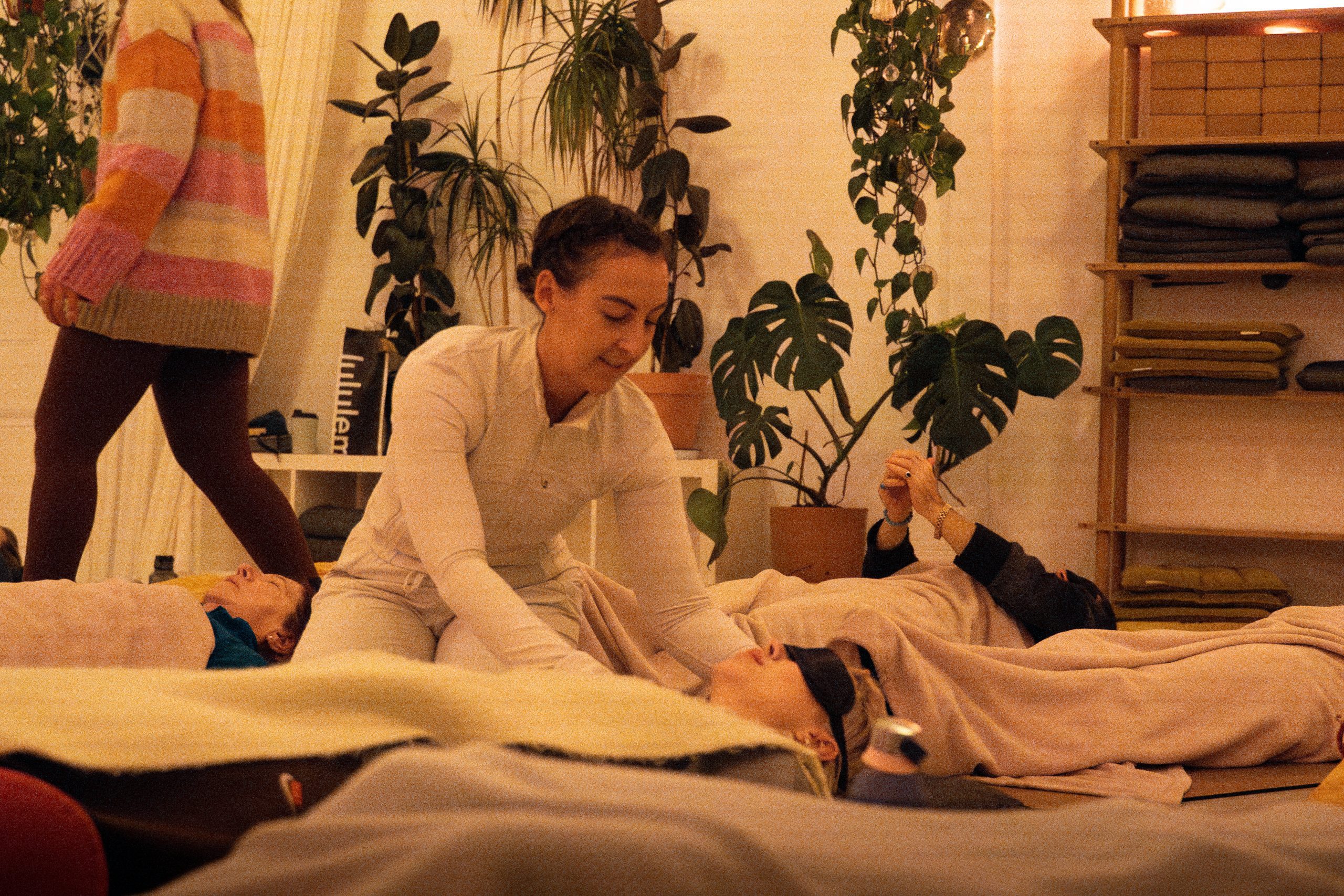
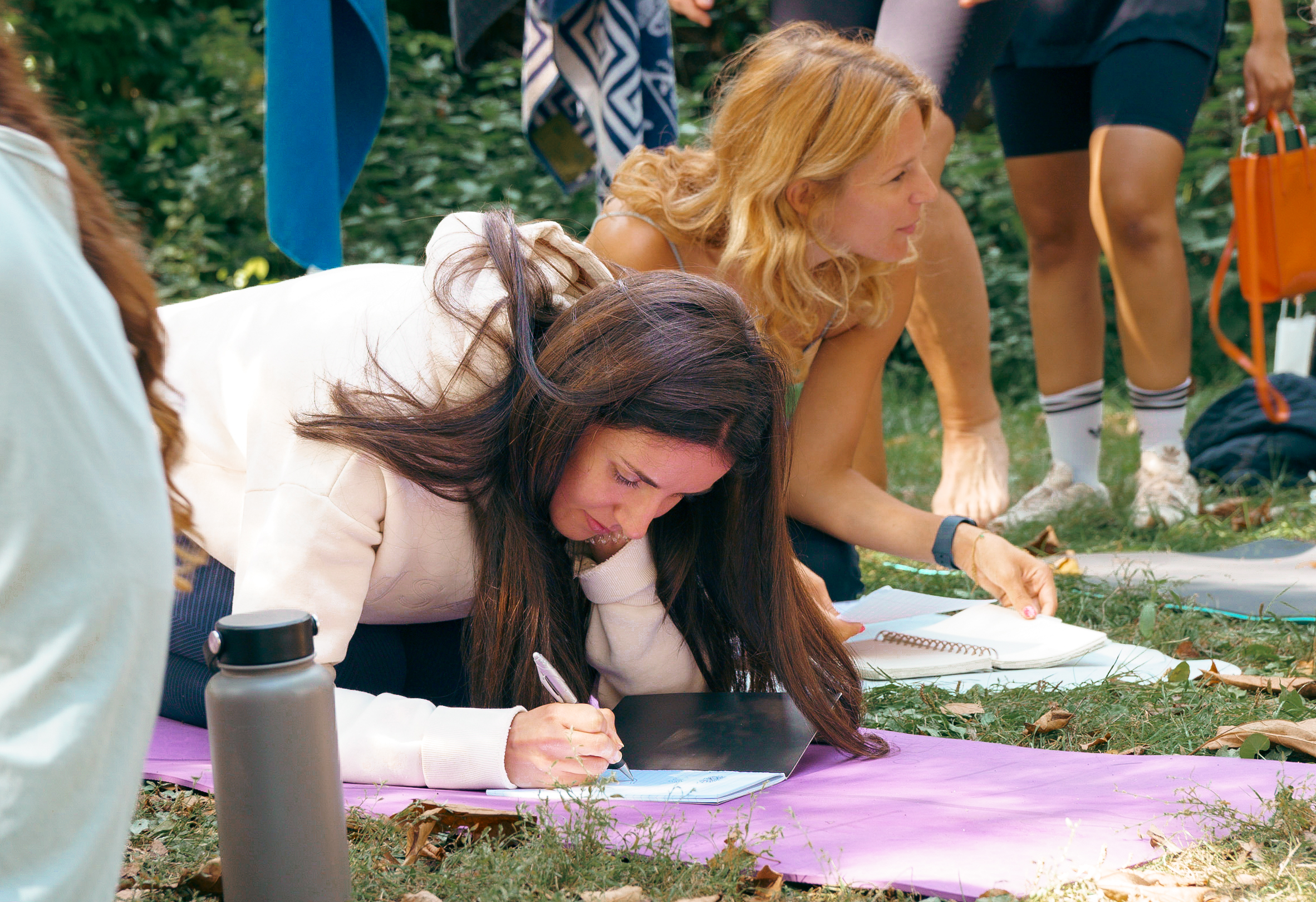
At Mindful Elements we are committed to providing corporate wellbeing days that include these potent external flow state triggers to facilitate individual and collective growth, now let’s take a closer look into each external flow state trigger.
Trigger 1 : Risk Taking

Extreme athletes have used risk to drive focus for decades as this increases attention and focus.
The increase in risk increases dopamine and adrenaline which enhance focus and performance, a neurochemical release that is extremely useful in high risk and reward situations.
This same neural mechanism can be applied to everyday tasks that require high focus. By intentionally creating an element of risk in your day, whether it is physical, social, mental, emotional, or creative, you increase pattern recognition in the nervous system.
Pattern-finding is the essence of learning because patterns represent structure and order, which help us organise our work, making it more accessible.
As the brain itself is geared toward pattern recognition, it seeks structure and organisation in chaos and randomness.
This increased pattern recognition also enables us to make better decisions, because we can think more critically and logically. Taking risks also helps us to stay engaged and connected to the world around us, as we are constantly looking for new opportunities and experiences.
In thinking of the characteristics that risk-taking entails, we might envision grit, fortitude, courage, creativity, resilience, cooperation, critical thinking, pattern recognition, and quick decision-making. These traits may be associated with extreme circumstances.
A question may be “I don’t do action and adventure sports or another activity that feels that risky, so implementing risk seems impossible”
The following activities might help spark this spark within you: hiking, practising simple balancing and jumping exercises, taking up a hobby you haven’t tried since you were a child, such as painting or drawing, or learning a new language.
These could be amplified in a group setting, through practising and experiencing all of these playful and exciting activities in a group setting.
The integration of risk taking needs to be within your personal challenge skills balance channel, and risks should only be undertaken if they are deemed appropriate.
When it comes to accelerated performance, we must understand that risk is the first external flow trigger. This means that if we want high learning, we need full commitment.
Mental chance taking is often a personal journey; leaning into fear is not easy, yet fear is often where personal growth occurs.
Trigger 2 : Creating a Rich Environment

Are you familiar with the feeling of losing yourself in a breathtaking mountain view? Have you ever walked through a forest in awe? Do you remember the last time you looked up at the stars in the sky or admired the clouds passing by?
All of these magical and awe inspiring moments define a “rich environment” one where novelty, unpredictability and complexity are all at play.
Spending time outdoors, visiting forests, lakes, and mountains can provide all three pillars of a rich environment. Accessing nature for some, especially those in an urban landscape may find this difficult.
Even a few moments spent in nature can provide a sense of awe and wonderment. Even just taking a walk in the park or sitting by a river can help to create a sense of connection to the natural world.
Novelty
According to neuroscience research, novelty is so powerful because it is our evolutionary instinct to check what’s new before we act on it. We are encouraged to explore novelty by the release of dopamine in the brain as a reward chemical.
There is a strong connection between novelty and learning, so we can exploit this knowledge for learning by trying new things and migrating information from short to long term memory storage.
We cannot expand our identities without access to new experiences and information. Our ability to gain new insights stems from examining situations from multiple angles, and our ability to determine what works and does not work in different situations can teach us about ourselves.
Not only does the human brain thrive on new experiences, but it also thrives on exploring new places, taking a different route to and from work, and if you have never done a crossword puzzle, try one, or listen to other kinds of music. Let your imagination run wild!
Unpredictability
Throughout human evolution, the unknown has been ever present in the development and survival of our species. Uncertainty is a driver towards more positive, exciting experiences. We get excited by the unknown.
We tend to pay more attention to the “deep now,” our present experience, when we don’t know what’s coming next.
According to new research, uncertainty is more powerful than certainty in boosting motivation to achieve a goal.
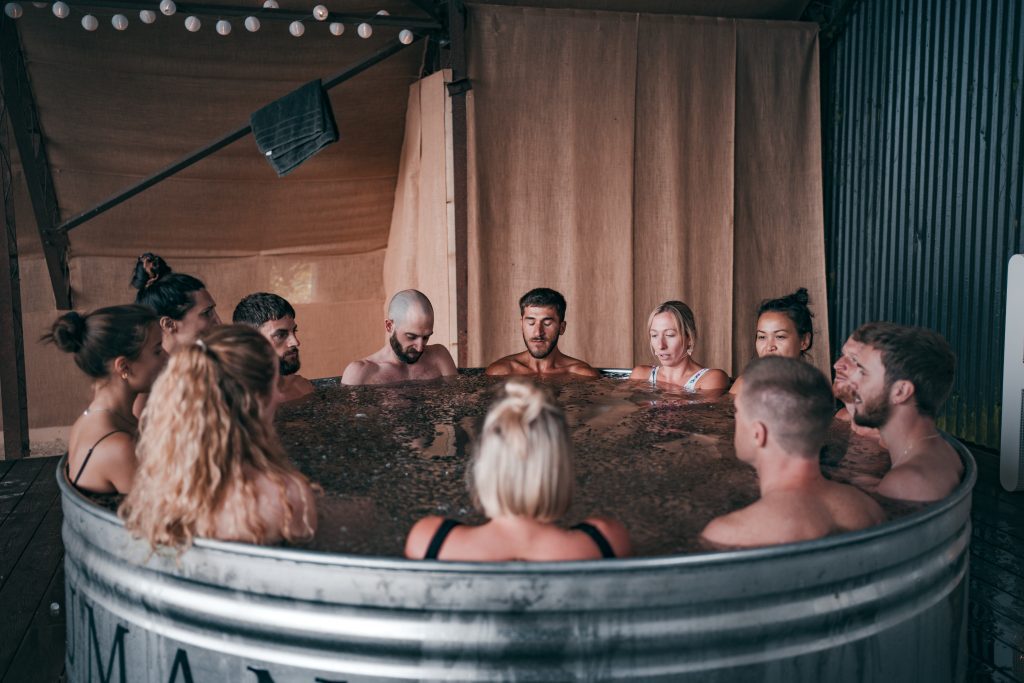
During our high performance and team wellbeing days, cold water therapy has become a core component for dealing with unpredictability. Dipping in cold water requires an open mind and an acceptance of the unknown.
An ancient practice that is now becoming a popular wellbeing trend and practice. Immersing yourself in in cold water elevates mood for many hours after exposure, spiking dopamine by 230%, the molecule responsible for allowing you to feel pleasure, satisfaction, and motivation.
Unpredictability can be experienced in many ways. There is a similarity and thread between the external flow triggers; all are explorative by nature and encourage curiosity.
Complexity
Humans are sensing, knowing complex organisms. Complexity is all around us, particularly in nature.
Nature contains an assortment of fractals, which are geometrical shapes designed only by nature such as lakes, trees, coastlines, and raindrops. Studies prove that just looking at fractals lowers cortisol levels, the stress hormone. It appears we are hard-wired to respond well to nature.
The ever changing landscape in nature, also facilitates panoramic vision, a field of vision that is often overlooked due to technological advancements. Placing a greater strain on our visual system.
Focal vision is associated with increased activation of the sympathetic nervous system (the accelerator branch of the autonomic nervous system).
When we stay in this high-focus mode for longer than our nervous system can tolerate, we may experience stress, anxiety, tunnel vision, or a “one-track mind” and hyper vigilance as a result.

As nature creates complexity, when experienced through expansion of the visual system more information can be encoded, creating a sense of internal freedom that contributes to wellbeing and flow.
Trigger 3 : Deep embodiment
Developing a sense of deep embodiment underpins a state of full presence and awareness, by carefully observing the subtle sensations in your body as they occur, you will learn how to recognise when you are centred and present rather than being “in the room but not actually in the room psychologically”.
The human brain can process 11 million bits of information every second, our senses are filtering this information unconsciously as consciously processing this information would simply not be possible.
Through our core senses we can consciously process 40-50 bits of information at once. Professor George Miller took this one step further and conducted research into how many bits of data people can process at any given time.
He came to the conclusion that a person can hold seven, plus or minus two, bits of information, that is, nine bits if they’re feeling good or have interest in a subject and as few as five if they’re feeling low or aren’t particularly interested in what they’re trying to remember.

This high speed environmental data is first arriving through our sensory maps before being processed and redirected from the brain back into the body.
Here’s the science to prove it. According to research 80% of the body’s information is first carried from the body and the vagus nerve to the brain by “afferent fibres” with the remaining 20% being processed through the brain back to the body through “efferent fibres”.
Listening to the body, tuning in allows us to access a deeper level of awareness and intuition. Accessing moment to moment attunement is the breeding ground for creativity and flow.
Deep embodiment in flow is tuning into the senses of the human experience, this largely involves heightened bodily awareness from inside your body as well as information your body is taking in from your surroundings.
This is sometimes called “felt sense”, which is the awareness of both external and internal stimuli that are continuous in our awareness.
“A felt sense is an internal aura that encompasses everything you feel and know about the given subject at a given time–encompasses it and communicates it to you all at once rather than detail by detail.” –Eugene Gendlin
Deep embodiment is a mindful awareness of fully inhabiting our bodies and minds, bringing a sense of presence and awareness to our physical sensations, emotions, and thoughts.
Mindful Tools
Here are some examples of how to integrate and personalise the external flow state triggers into your daily routine.
Here are some examples of how to integrate and personalise the external flow state triggers into your daily routine.
- Mindful breathing, The intentional use of the breath can be an anchor for the present moment. Pacing the breath at roughly 10 breaths per minute is an ideal rate. Both mind and body will be calm and alert when nasal breathing is prioritised throughout the day.
- Acknowledge, FIVE things you see around you 2. Acknowledge FOUR things you can touch around you 3. Acknowledge THREE things you hear.4. Acknowledge TWO things you can smell 5. Acknowledge ONE thing you can taste.
- Risk taking, complexity and novelty can all be accessed by being curious, challenging yourself to try something new or something you haven’t done for a long time perhaps even since your childhood.
Final Thoughts
Human beings are hardwired to explore, create and challenge themselves. In modern-day society, we often fail to utilize the natural world to its full potential, making it easier for us to become linear by nature as we move through our days.
You can maximise your performance and wellbeing by making small changes that are intentional to make you perform and thrive at your best.
Through the integration of ancient practices and modern science, Mindful Elements helps individuals and teams thrive.
Click here to schedule a discovery call to explore how we can maximize team performance and wellbeing.
Please like, subscribe, and comment below if this resonates with you.
Healthy regards
Ollie