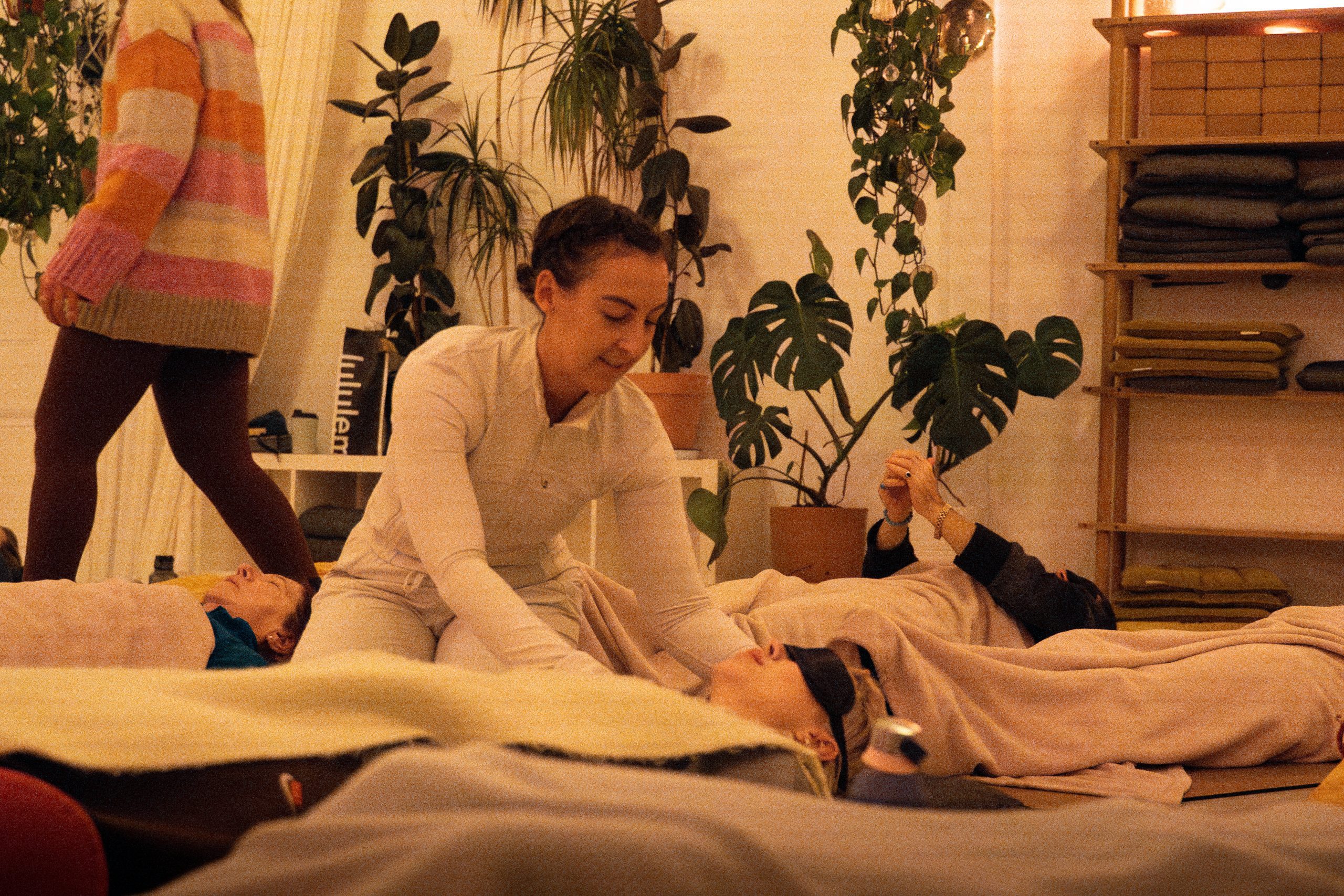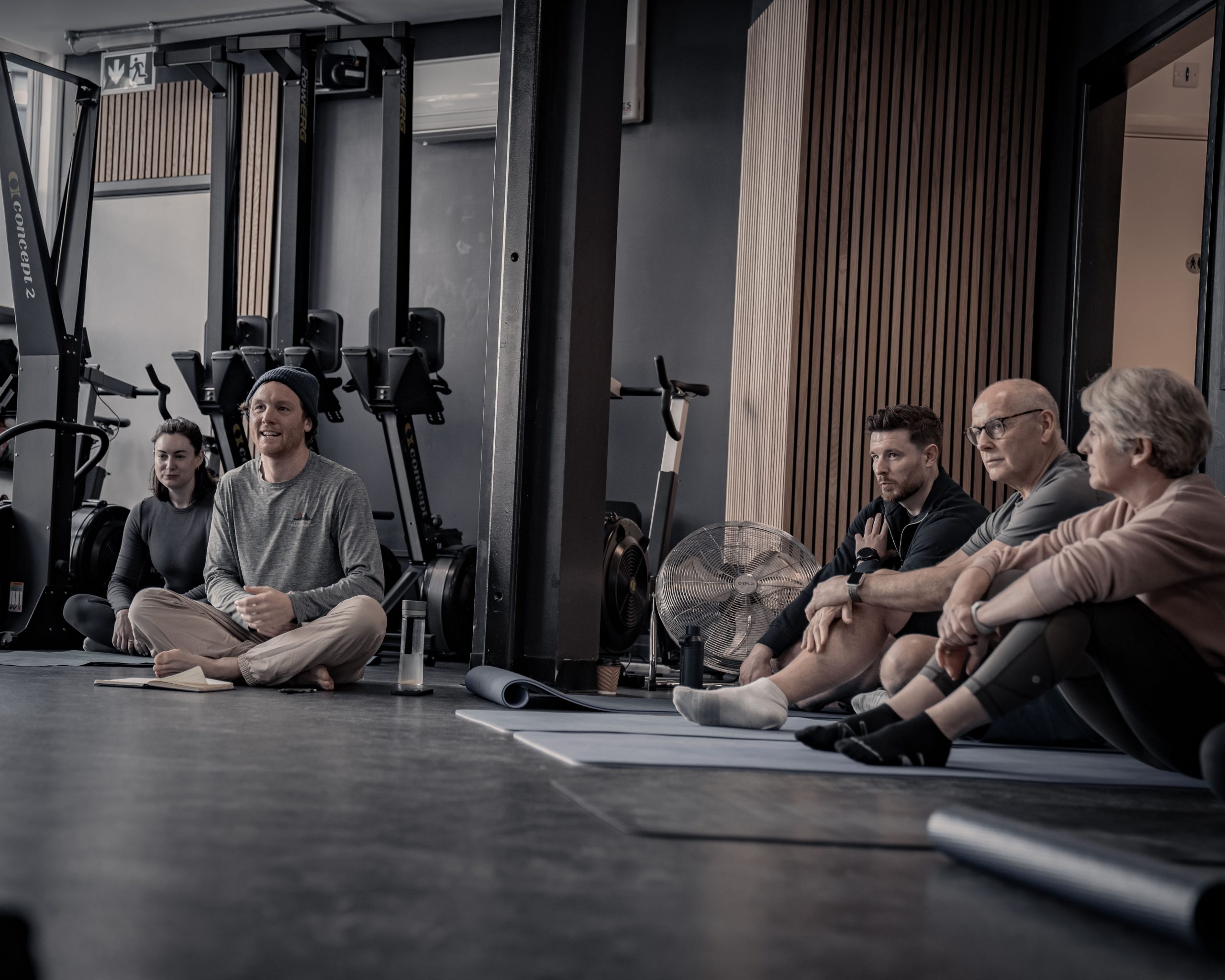
It was certainly a first for me to interact with over 100 new people in one week, and the energy of spring was certainly welcome.
The workshops covered everything from mindfulness to flow to nervous system resilience practice to connection workshops, with a common thread of human connection running through them all.
However, among the subject areas explored, there was one particular aspect of the human experience that stood out. This was the importance of real, authentic human connection.
Adopting a Mindful Approach

Over the last seven days, I have been fortunate to share my work with the Newham team for World Social Work Day, a male-focused developmental experience at Mindful elements nature space, a community workshop at Evolve Fitness in Fulham, and a virtual webinar for breathing plus.
For all four workshops, I wanted to create practices and content that were underpinned by the definition of mindfulness that I believed would facilitate deep, authentic connections.
Mindfulness is a modern translation of the word sati in Pali – a language native to India during the Buddha’s time.
The definition of mindfulness comes from Jon Kabat-Zinn, a biologist whose pioneering research into mindfulness in stress reduction paved the way for its remarkable popularity.
Kabat- Zinn defined mindfulness is paying attention in particular way : on purpose, in the present moment, and non-judgementally.
Mindfulness is not a new age intangible abstraction of lofty minded seekers of spiritual enlightenment. Instead, it is a concrete discipline proven to provide real measurable benefits for your behaviour, performance, health and happiness.
It is a well developed, thoroughly substantiated evidence-based process for gaining clarity and accessing and developing greatest potential.
Mindfulness practice enables us to gradually use the mind as a tool rather than a tool and an obstacle. Our past conditioning often persists in our minds, that often gets in our way and causes us to make poor decisions. Mindfulness trains the mind to become open, aware and actively engaged.
A formal mindfulness practice includes meditation, focused mindfulness practices centred on the present moment. In contrast, an informal mindfulness practice focuses on all of our daily experiences, from work to social and everything in between.
Informal practice is the ability to cultivate conscious, present moment awareness that catalysts authentic human connection.
In addition to the three pillars of mindfulness, it can be further deconstructed into three component skills that are necessary for everyone to be mindful. These are the three pillars include purposeful attention, present moment awareness, and nonjudgmental attention.
Throughout the recent workshops these pillars were exercised, explored, and integrated that provided the framework for authentic connection to develop.
Purposeful Attention
The first component of mindfulness is paying purposeful attention. This means learning to intentionally direct and sustain our attention. Almost like a flashlight in a dark room, without mindfulness the light our attention drifts randomly from corner to corner.
With mindfulness, we can steady our flashlight on particular spots. Adults have an attention span of 8 seconds, according to a study by Microsoft.
A study by Harvard Business Review found that people check there phones an average of 150 times per day, or every 6 minutes.
Without judging the rise in distractions, it’s now more important than ever to increase attentional capacity.
The first step in creating attentional acuity is to pay attention to sensations associated with our breath. By stopping, paying attention to the sensation of breathing itself creates a space between the stimulus of our internal and external worlds. This redirects the flashlight of attention towards purposeful mindful attention.
Studies have shown that mindfulness practice leads to significant improvements in critical cognitive skills after only 4 days of training for 20 minutes a day.
Including sustained attention, visual spacial processing, working memory that helps with processing and reasoning, quite simply super powers in the modern day climate that has been built for distraction.
In the Present Moment

The second element of Kabat-zinns deinfition of mindfulness is paying attention to the present moment. By practicing grounding our attention in the present rather than focusing on the past or future.
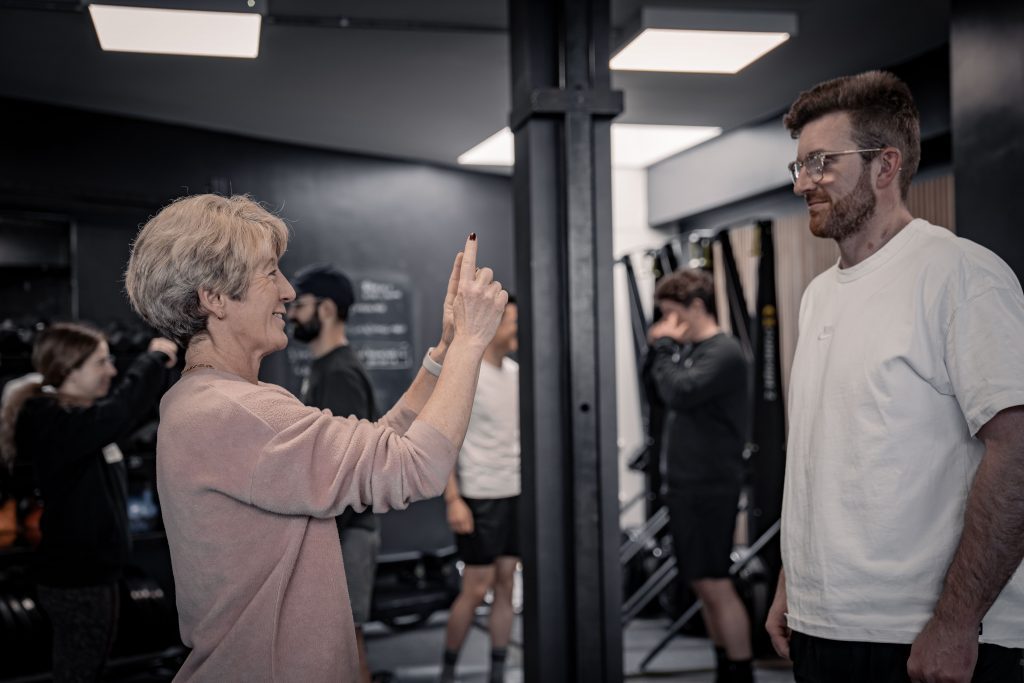
Throughout the workshops, there were elements of active listening, a skill and practice that creates present moment awareness and conversational flow.
In both personal and professional interactions, active listening is essential for effective communication and understanding.
Listeners who actively engage with speakers demonstrate respect and validation for the speaker’s viewpoint by listening attentively, responding empathetically, and observing nonverbal cues.
Active listening promotes mutual trust, encourages open dialogue, and helps uncover underlying concerns or emotions, leading to more meaningful connections and problem-solving.
As part of our exploration of present moment awareness, we also explored ways to become more aware of our bodies, through movement and playful activities.
Practicing body awareness is an effective way of connecting with bodily sensations, the sensations of the body.
These may include sensations associated with the breath, tension or lightness in the body, postural feedback, spatial orientation exercises that include balance and proprioception, all of which enhance body awareness.
Using active listening, sensory mapping, bodily awareness, movement, and play, attendees and groups could fully engage their bodies and minds.
Non Judgmental Attention
The third component of mindfulness is nonjudgmental attention. This means bringing an attitude of curiosity and acceptance to our present moment experience.
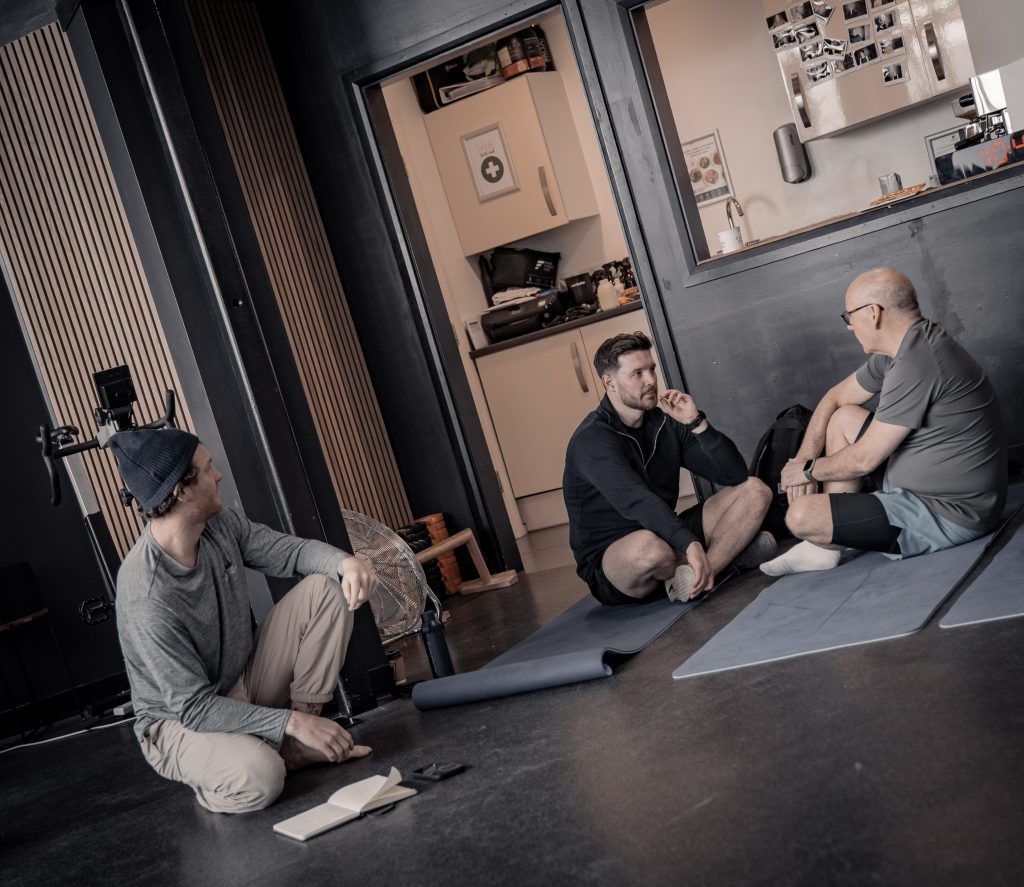
There was a strong emphasis on observation and reflection throughout the workshops, where the experience was the outcome, rather than a specific expectation or performative aspect, creating an environment that was open and free to explore.
Throughout the workshop series, there was an emphasis on understanding the brains hardwiring, specific to negativity bias.
Understanding and recognising the evolutionary negativity bias inherent in humans is critical to cultivating a more mindful approach to the human experience and how we shape and form our human relationships.
Humans have evolved to be more sensitive to negative stimuli as a survival mechanism. The bias causes individuals to pay more attention, remember, and react strongly to negative experiences.
Mindfulness and awareness practice not only help to become aware of the negativity bias, but also create more positive experiences through gratitude, as the brain cannot simultaneously experience anxiety, worry, and doubt when it is experiencing gratitude.
Easily accessible practices that incorporate reflection, active listening, gratitude are potent ways to reframe and detach from the hardwiring of the impacts of the negativity bias.
Studies have shown that when gratitude is written down, people become more alert, enthusiastic, optimistic, energetic, less stressed, and less depressed.
Patience and awareness is required when the intention is to rewire the brain, old patterns can be hard to break. Beginning with a simple question of self reflection per day of what went well in the day is a great start.
To Conclude

It was a great experience delivering the close succession of workshops, each of which was unique in its own right but fundamentally connected by these pillars of mindfulness and human interaction.
In order for a team, organisation or group to create a positive impact, connection is essential.
Creating these conditions mindfully provides the framework and container for self and group exploration.
As human beings, we are deeply hardwired for cooperation, so mindfulness is not something we have to learn, but rather unlearn to re-learn what we already knew was true, that we are hardwired for connection.
As a species, we wouldn’t have survived this long without our connection to each other. As the world moves faster, technology accelerates, and uncertainty has become the norm for a large part of the population now more than ever it’s time to reconnect, stay present and connected to one another.
It is my firm belief that introducing mindfulness into each experience, interaction in our daily lives is one of most powerful ways to counter and alleviate suffering on a personal and collective level on a daily basis, that will serve long term happiness and health.
Thank you very much to all of the organisers who have invited me to share my passion, and act as a bridge between wisdom traditions and scientific discoveries that support this work so evidently.
Feeling curious and would like to know more? then head to any of the Mindful Elements offerings to begin your journey towards optimal health and happiness.