It is estimated that 17.9 million working days were lost due to work-related stress, anxiety, or depression in the UK in 2019/20.
There is an annual cost of about £26 billion to British businesses due to work-related stress and mental illness. A second estimate puts the figure at £45 billion per year.
What is the solution with these figures taken before the pandemic, and with statistics on the rise?
In order for change to take place a human-centric approach is essential. One that recognises the importance of workplace wellbeing and does not simply consider it “another activity”.
Corporate wellbeing is trending at the moment, and for good reason: without individual health, bottom lines and long-term strategies will suffer.
My experience as a holistic therapist and corporate wellbeing facilitator at Mindful Elements has involved working with hundreds of individuals on a wide range of issues, from performance to pain relief.
The thread amongst all these is that humans have a capacity to thrive and maintain balance for both body and mind when the necessary conditions are in place.
This article discusses workplace well-being as a dynamic concept that plays a pivotal role in nurturing a thriving organisational culture.
Now let’s dive into the four main pillars that when integrated overtime are able to create significant long lasting results.
Pillar 1 : Self Awareness
Awareness opens the door, action walks us through it.

“The significant problems we face cannot be solved at the same level of thinking we were when we created them” Albert Einstein
The first step in creating any positive change is to recognise the significance of self awareness as a tool for transformation.
Self-awareness can be broadly defined as “the extent to which people are consciously aware of their internal states and their interactions or relationships with others”.
Self-awareness allows us to see things from others’ perspectives, practice self-control, be creative and productive, and feel pride in our work and ourselves.
The fact that we can see ourselves from a different perspective separates us from other animals.
Besides affecting our behaviour and attitudes, this sense of awareness also shapes the way we view other people and the world around us.
Our ability to manage our emotions determines how effectively we manage the rest of our lives.
Self-awareness may be the most vital skill we have to navigate our future challenges.
Self Awareness Tool Box
- Decide how you want to show up in the world by creating 3 values personal to you.
- Identify the patterns and behaviours that reflect your desired values.
- Journal daily for 5 minutes reviewing your alignment to these values, this simple practice creates a space for self-reflection.
Pillar 2 : Physical Wellbeing

The body contributes far more to our lives than just physical attributes such as strength and endurance, it plays a major role in emotions, learning, and relationships.
All of our feelings, thoughts, and understandings are intimately linked to our bodies. The mind and body are inseparable.
Movement directly impacts our postural health, energy levels, and our ability to manage emotional and physical stress and strain in our modern day environment.
Lower back pain (LBP) is a major health problem with two thirds of adults suffering from LBP at some time in their lives.
The human body is designed to move, this includes everything from walking, running, balancing, jumping, crawling, climbing, to manipulative skills such as lifting, carrying, throwing, and catching.
Other species do not follow a strict pattern or regime, nor should we. Unpredictably helps maintain the flow of life. Adopting a movement practice is no different.
We will all experience unfortunate aches and pains in our bodies at some point in our lives, as well as acute and chronic injuries. A preventative mindset is key to building resilience and flexibility in the body.

Functioning Breathing
Besides sedentary living, breathing patterns that are dysfunctional, and poor emotional regulation contribute to lower back pain.
Dysfunction breathing spikes cortisol the main stress hormone in the body over a prolonged period of time, negatively affecting wellbeing and performance.
Functional breathing involves using the diaphragm and other respiratory muscles efficiently to ensure optimal oxygen intake and carbon dioxide removal.
It’s more than just the act of inhaling and exhaling; it’s about breathing in a way that supports the body’s movements and activities.

75% of people with anxiety have dysfunctional breathing patterns.
As well as affecting anxiety levels and pain perception, having a limited awareness of the breath also affects spinal stabilisation and postural patterning.
Over breathing, referred to as thoracic breathing or chest breathing, has been shown to increase blood pressure, trigger physiological, psychological changes, and negatively affect health.
Move & Breathe Tool Box
- Invest five minutes every day to gently stretch, bend, hang, and rotate your body in various directions.
- Practise coherent breathing every day to regulate the nervous system, which is 5 seconds inhalation, 5 seconds exhalation for 5-10 minutes.
- Whenever possible, breathe through your nose, mouth breathing is most effective when you are exerting a lot of energy.
Pillar 3 : Emotional Wellbeing

To be human is to feel the spectrum of human emotions. We have often been taught to stand strong, and that showing vulnerability is a weakness.
Emotions are simply energy in motion. They are not fixed or permanent; however, when they are not processed, they can consume us both mentally and physically.
Over 12,000 to 50,000 thoughts pass through our awareness every day, of which 80% are negative, according to the National Science Foundation (NSF).
This inbuilt evolutionary design response to threat was useful when we were evading tigers and lions.
50,000 years later, these unhelpful thoughts can often manifest as regrets about the past, fears about the future, unhealthy comparisons, and blaming and shaming.
Emotional Wellbeing Tool Box
- Notice your thoughts and exert self-awareness, and remind yourself that thoughts are just that, thoughts, and don’t necessarily represent reality.
- Breathe slowly through your nose for the count of four and exhale for the count of six for six cycles, while noticing sensations and feelings as they arise without judgement or need to control.
- Journal your thoughts, putting them on paper creates a detachment from yourself and the thoughts, helping closing the loop of rumination and intrusive thoughts.
Pillar 4 : Social Connection
“If you want to go fast go alone, if you want to go far go together” African proverb
We are social creatures hardwired for connection. Individual growth and happiness can’t be met without first satisfying the more basic need for human connection.
Employees who feel a sense of belonging and connection with their colleagues are more likely to be satisfied with their work and contribute positively to the overall work atmosphere.
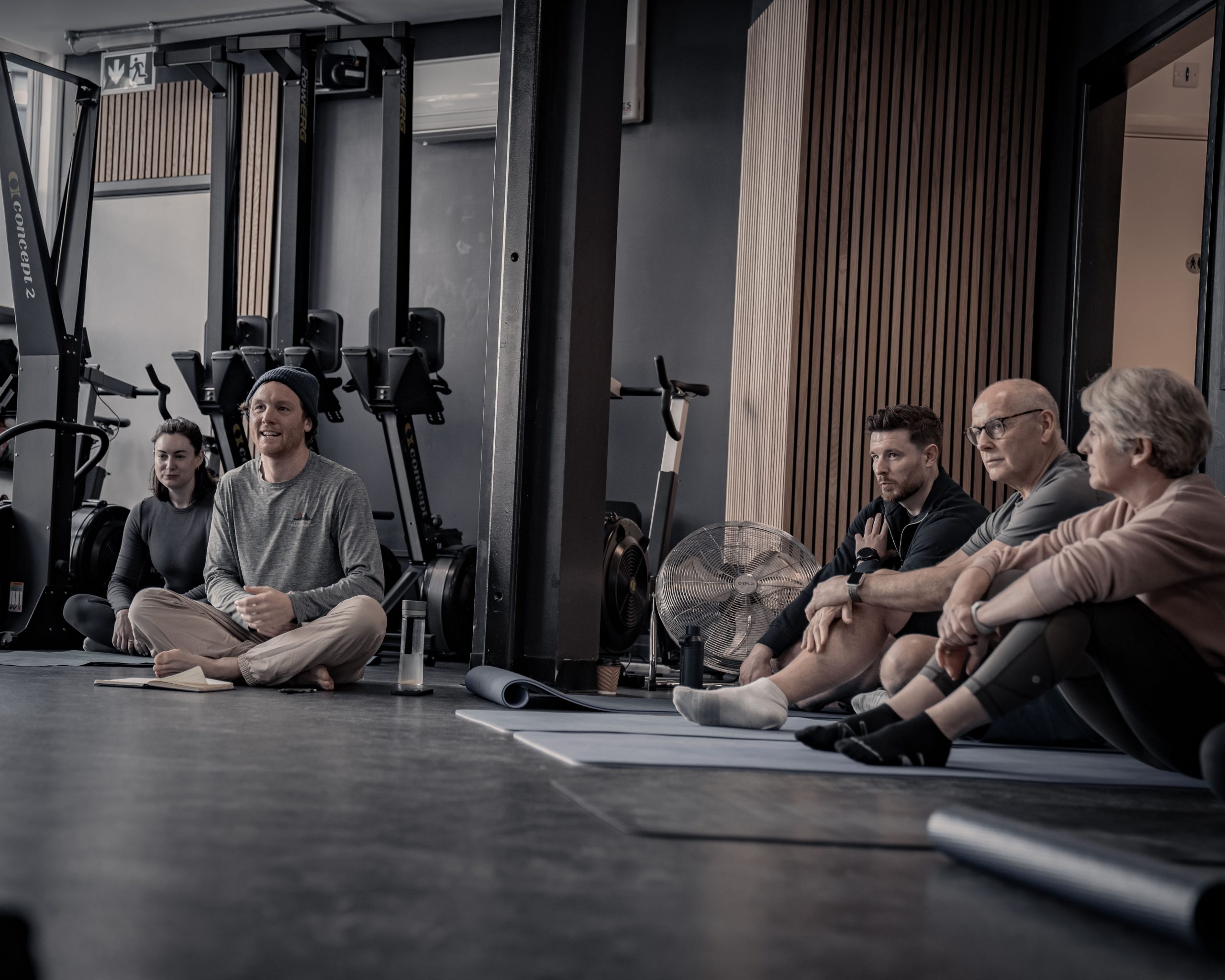
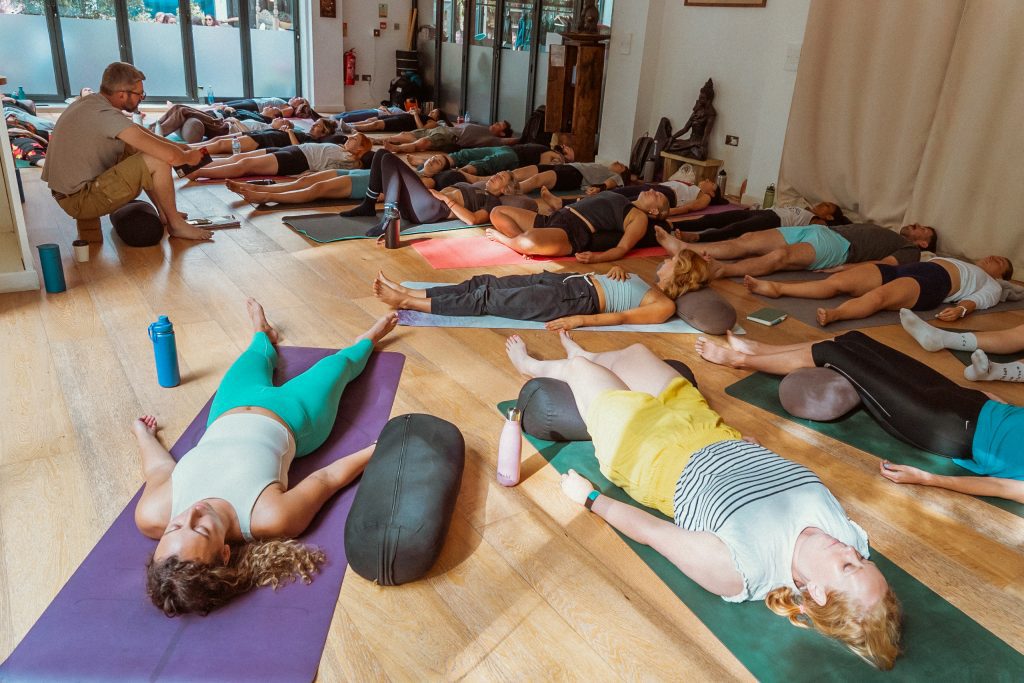
The Mindful Elements corporate wellbeing day, places a strong emphasis on social connection through immersive wellbeing practices that are led by our team of highly skilled practitioners including leadership and thought leader Nathan Simmonds.
In order to succeed and grow as individuals and as a community, we need our biological needs met, emotional accessibility and being truly heard and seen by our tribe is one of those needs.
Social Connection Tool Box

In 3-5 minutes, this simple check-in exercise creates a space for dialogue between team members to build trust, cohesion, and long-term relationships.
The following exercise can be done in pairs or small groups.
During the first 2 minutes, participants will practise slowing down the breath to increase presence and active listening.
Using single words or short phrases, each person will be able to share how they are feeling.
P – Physical, checking in to describe your current physical state, including energy levels, muscle tension, lightness in the body, stress levels.
I – Intellectual, describing how you feel intellectually, this may indicate clarity, focus, creativity, and overall productivity.
E– Checking in emotionally, identifying recent emotions and recognising any bodily sensations that may be present.
S– Check in socially, are you feeling connected with others, or are you feeling more reserved and needing more time to reflect and decompress at present?
An important aspect of this exercise is that it is a judgement-free space, in which the speaker should not be interrupted, but simply acknowledged and listened to.
This is one example how to create opportunities for employees to connect beyond their professional roles enhances the sense of community within the organisation.
Lets wrap this up
My question to you is “Which strategy from todays post are you going to try first?”
These cornerstones of wellbeing, when practised incrementally and consistently overtime, yield long-term benefits for both employee and employer.
The four pillars of corporate well being explored in this article are self-awareness, physical wellbeing, emotional wellbeing, and social connection.
Using these pillars, individuals can recognise their own internal states, prioritise movement and functional breathing, process emotions, and cultivate a sense of belonging.
The above tools and techniques are cost free behavioural strategies, that are evidence based best practices that take very little time each day to complete.
The Mindful Elements corporate wellbeing day is designed to create safe and inclusive environments where all these pillars of wellbeing are integrated for individuals and teams to thrive.
if you or your organisation would like to know more please send us an email to
Stay healthy
Ollie (Mindful Elements Founder)